Riverfire draws enormous crowds to Brisbane’s riverfront, and when the fireworks finish, thousands of people begin leaving at the same time. Following the congestion experienced in 2025, Brisbane City Council and transport agencies openly reviewed the challenges and reshaped the 2026 approach around crowd capacity, key choke points and effective on-ground management.
For venues, festivals and licensed premises across South East Queensland, there is a valuable lesson in that experience. Effective crowd management is not simply about increasing security numbers. It requires careful egress planning, appropriately licensed personnel managing queues and crowd movements, and a clear operational plan for the critical period after the main event concludes. The 90 minutes after the headline act should be planned and managed with the same level of attention as the event itself.
What the Riverfire record actually shows
According to the Brisbane Times (Marissa Calligeros, August 2026), authorities acknowledged that public transport demand following Riverfire 2025 had been significantly underestimated. Insufficient bus and train capacity contributed to severe crowd congestion and extended delays, particularly around the Cultural Centre busway at South Bank, which was identified as a major pressure point. Capacity constraints also affected inbound travel, with some passengers unable to reach the city as services were already full.
For Riverfire 2026 (Saturday 5 September), Brisbane City Council planned an extra 36,500 bus trips in the 90 minutes after the display — almost five times the 7,800 additional passenger trips allowed for in 2025. Council transport chair Andrew Wines called that uplift “almost five times the additional capacity provided last year.” Queensland Rail scheduled 80 extra train services (38 before the fireworks, 42 afterwards). QR’s Neil Backer noted that moving an estimated 90,000 revellers through a small number of stations would still create queues in a short-lived peak.
More than 500,000 people were expected across CBD, South Bank, Kangaroo Point, Howard Smith Wharves, and Wilson Outlook. Unlike New Year’s Eve, Riverfire crowds tend to head home immediately after the display — one sharp peak at nearby stations rather than a staggered drain into nightlife. Riverfire itself is an alcohol-free public event; the density challenge is about simultaneous departure, choke points and transport handoffs — not intoxication.
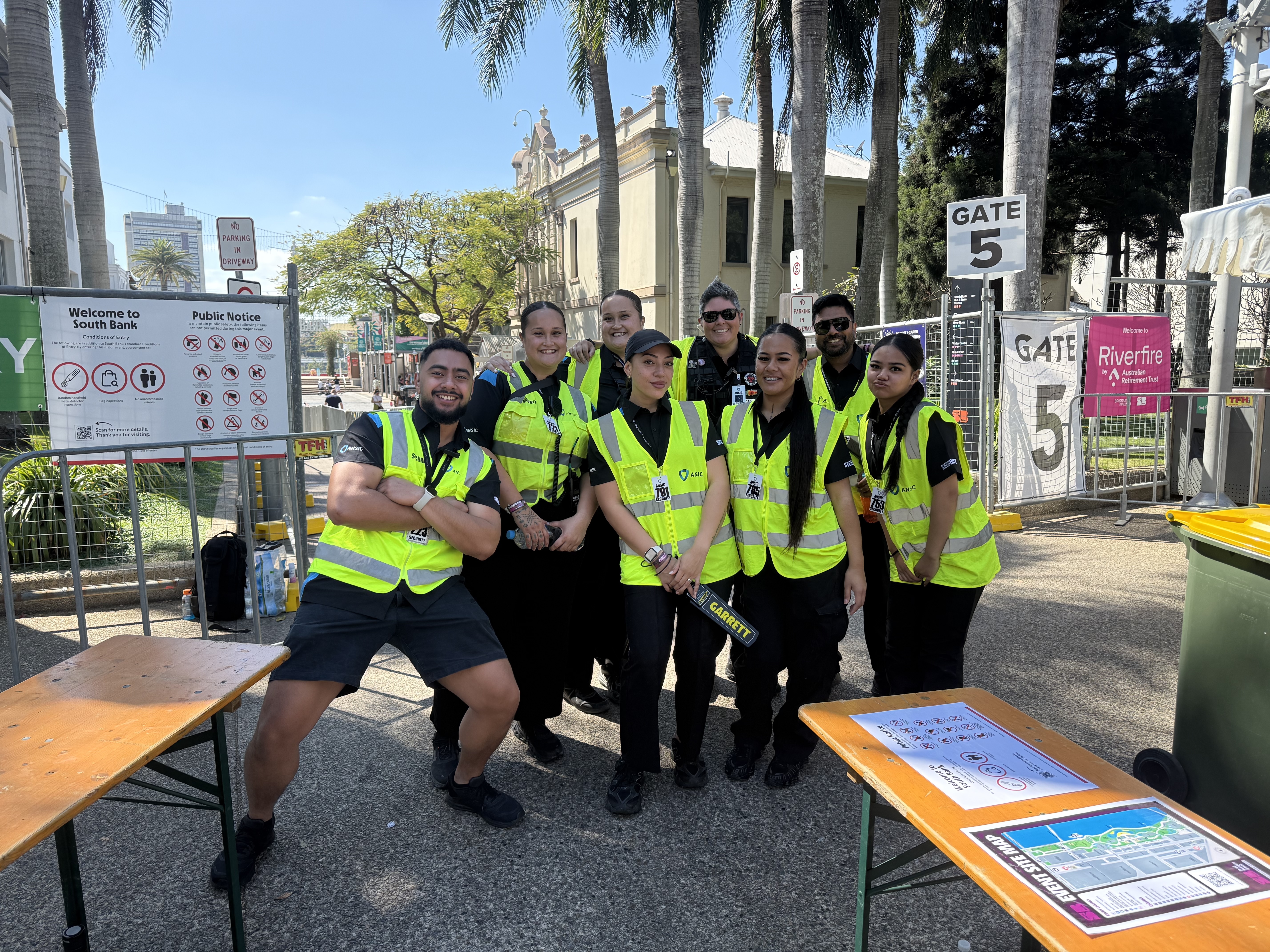
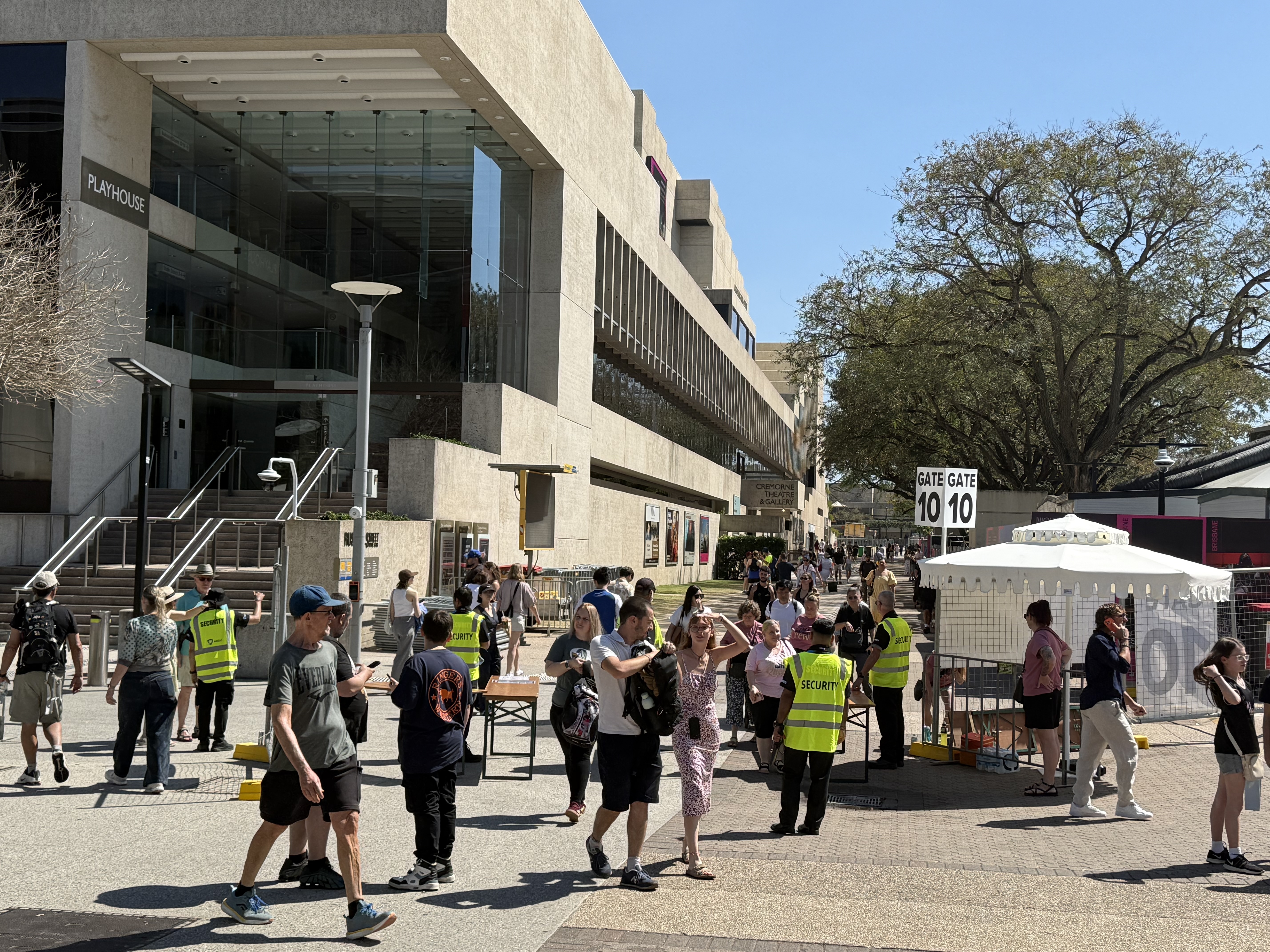
Council also planned dedicated shuttles from major hubs (similar to NRL arrangements at Suncorp Stadium), better signage, and 60 additional customer service staff, security guards, and bus marshals. Queensland Police said live CCTV in the event command centre would trigger adaptive traffic and foot-traffic plans when numbers spiked. Brisbane Festival said particular attention went to South Bank and the Cultural Centre transport precinct.
Those are published figures and quotes — not guesses. SEQ operators should borrow the logic, not invent their own statistics.
Why this matters for venues and licensed premises
Crowd congestion is not unique to major events such as Riverfire. Similar risks emerge whenever high crowd density, heightened emotion, heat, fatigue and restricted movement converge. This can occur at closing time in an entertainment precinct, when a festival crowd moves simultaneously after a headline act, as a function venue empties through a limited exit, or where large pedestrian flows are directed towards public transport.
Riverfire reinforces four important principles that should be considered in any effective security and crowd management plan:
- Arrival capacity ≠ egress capacity. You can fill a precinct all afternoon and still fail in the last 90 minutes if exits and handoffs were planned for a trickle.
- Choke points kill paper plans. The Cultural Centre busway was identified as a significant pressure point following Riverfire 2025. Every venue and event has potential equivalents, including narrow stairways, entry and exit gates, street queues, car park access points and pedestrian corridors. These locations should be identified during planning and actively managed during periods of peak movement.
- People on the ground beat signage alone. Signage and physical controls are important, but they cannot replace trained personnel positioned where crowd behaviour and movement need to be actively managed. Security officers, crowd controllers and marshals provide the ability to identify emerging congestion, communicate with patrons and respond as conditions change.
- Licensing is not a paperwork tax. Queensland venues and event organisers must ensure personnel performing regulated security functions hold the appropriate licences for the duties they undertake. Using unlicensed personnel to perform crowd-control functions can create significant regulatory, operational, insurance and liability exposure.
ANSIC provides licensed security and crowd management services across South East Queensland, supporting venues and major events with experienced personnel and operational planning designed for both normal operations and periods of peak crowd movement.
How-to: a crowd-crush-aware licensed security plan
1. Map the egress peak before you map the lineup
Effective crowd management should begin with the point of maximum departure, not just the event schedule. Work backwards from the end of the performance, event or service period and consider where patrons will move first, where congestion is most likely to develop, how long queues can be safely maintained, and what contingency measures are available if crowd density begins to increase.
Planning should also identify who has the authority to open secondary exits, redirect pedestrian flows, temporarily restrict entry or redeploy personnel to priority areas. A plan that simply identifies gate locations and security shift times is a staffing plan; an effective crowd management plan must also address how those resources will respond during peak movement.
Riverfire demonstrated the importance of significantly increasing transport and crowd-management capacity during the concentrated post-event period. Venues and events should apply the same principle proportionately, including the planned redeployment of security and crowd-control personnel from internal areas to exits, queues and other identified pressure points as the event concludes.
2. Name the choke points in writing
Give every bottleneck a name, a capacity assumption, and a trigger — for example: hold Stair B at a set visible density and divert to Stair C; soft-close the front door when the footpath exceeds the agreed line; two controllers on the car-park boom with no simultaneous inbound traffic during peak egress. Small venues rarely have a police command centre, but they can still agree triggers (queue length, radio congestion, clustered first-aid calls) that flip the team from “welcome” to “egress.”
3. Staff the handoff, not only the fence
Riverfire’s uplift mixed transport capacity with security guards and bus marshals. Festivals need licensed event officers who understand the handoff to coaches, rideshare, or public transport — not only the pit. Hotels and clubs need controllers who own the exit and street frontage, not only ID at the door.
A practical split for many SEQ briefs:
- Pre-peak: access, ID, floor presence
- Peak egress: exits, choke points, street queue, transport liaison
- Aftercare: sweep, incident close-out, registers and occurrence log complete before clock-off
4. Use licensed crowd controllers — and kill the myths
Myth: “It’s a community outdoor event, so volunteers in high-vis can do crowd control.”
Reality: Where the role is controlling crowds or performing security functions that require a Queensland security provider licence (including the crowd-controller function), unlicensed people put the organiser at risk. Volunteers can welcome and give directions within clear limits — they are not a substitute on a dense gate.
Myth: “Cameras and a PA will manage egress.”
Reality: Riverfire’s plan still put dozens of extra humans at the problem. CCTV informs decisions; licensed officers execute them. ANSIC can sit CCTV and alarms behind an officer — they do not replace one on crush risk.
Myth: “Any firm with a website can stand a big gate.”
Reality: Ask for Queensland licensing posture, crowd-controller function on the officers, daily licence checks, and whether licensed-venue sign-on references Fair Trading so wrong-class or expired licences cannot clock on. ANSIC uses Guardhouse for roster, GPS/geofence clock-in, and daily licence checks, and Security Registers for licensed-venue QR sign-on.
Myth: “Interstate licences equal local delivery.”
Reality: ANSIC holds security licences in Queensland, New South Wales, and Victoria, and delivers security services in South East Queensland. Depth on your door this Friday matters more than a national slogan.
5. Radio, first aid — and RSA only where alcohol is served
Crowd management risks can still increase where alcohol is present in other venues and events — intoxication may affect behaviour, communication and patron movement. Where alcohol is served, appropriately trained personnel should understand RSA requirements and work closely with venue management so refusals of service, removals and related incidents are properly managed and documented.
For outdoor and major events, including alcohol-free events such as Riverfire, the focus extends to broader operational readiness. Security personnel should understand first-aid and emergency procedures, maintain clear radio communication and have established escalation pathways to supervisors and event management. ANSIC applies this coordinated approach across major South East Queensland events, integrating crowd management, site security and emergency response within the broader event operation.
6. Plan early, test the pressure points and debrief
Effective egress planning should begin days or weeks before the event, not when crowds are already on site. Event management, security and relevant stakeholders should review expected attendance, pedestrian routes, transport interfaces and likely congestion points well in advance. Where practical, walk the proposed egress routes, assess the capacity of stairs, gates and other restricted areas, and coordinate with neighbouring venues, transport providers or other stakeholders where crowd movements may overlap.
Contingencies should also be established before the event, including when additional exits will be opened, when security personnel will be redeployed to egress positions and who has authority to make those decisions if conditions change.
Following the event, the plan should be reviewed against what actually occurred. Identify which pressure points developed first, whether resources were deployed at the right time, how effectively crowds moved through the precinct, and whether security records, incident reports and other compliance requirements were completed. This cycle of planning, testing, delivery and review is what allows lessons from one event to translate into measurable improvements for the next.
Soft next step
If your SEQ hotel, club, festival fence, or outdoor program is still stronger on arrival than on exit, tighten the brief.
Tell us the site, the peak window, and the choke points. We will come back with a licensed plan that treats the last 90 minutes as seriously as the first song.
—
Editorial source: Brisbane Times — “How council plans to avoid a repeat of Riverfire crowd crush,” Marissa Calligeros, Aug 2026 (and agency statements cited therein). ANSIC was not the subject of that article; lessons applied for SEQ venue and event operators.
ANSIC — veteran-owned. Security services delivered in South East Queensland. Licensed in Queensland, New South Wales, and Victoria. ASIAL; ISO 9001 / 14001 / 45001. Firm licence: QLD 3417266 (confirm on Fair Trading if re-checking).