
Festivals and large events live or die on how people move. A strong lineup will not save a site if the front of house is chaotic, the bars are overwhelmed, or an incident cannot be isolated without emptying the paddock.
Crowd control is not a row of people in high-vis at the fence. It is a plan for density, flow, alcohol, weather, and the five minutes after something goes wrong. For promoters and venue managers in Queensland, that plan also has to stand up to licensing, local council, and the questions that come after a complaint.
This is how ANSIC approaches festival and event crowd control: operators first, paperwork that matches the ground, and a team that has actually done the job at scale.
What crowd control actually covers on an event site
On a festival or concert site, crowd controllers are usually the first people a patron deals with and the last people still working when the site is being packed down.
Typical coverage includes:
- Front of house and ticket scans, including ID and RSA checks where alcohol is served
- Queue management so density does not build in the wrong place
- Stage-front and barrier work during peak sets
- Roaming inside bars, food precincts, and quiet areas
- Response to medical, welfare, and behavioural incidents without turning them into a second problem
- Egress and car park flow at close, which is where many events lose control
If your brief only says “X guards for the night,” you do not have a crowd plan. You have a headcount.
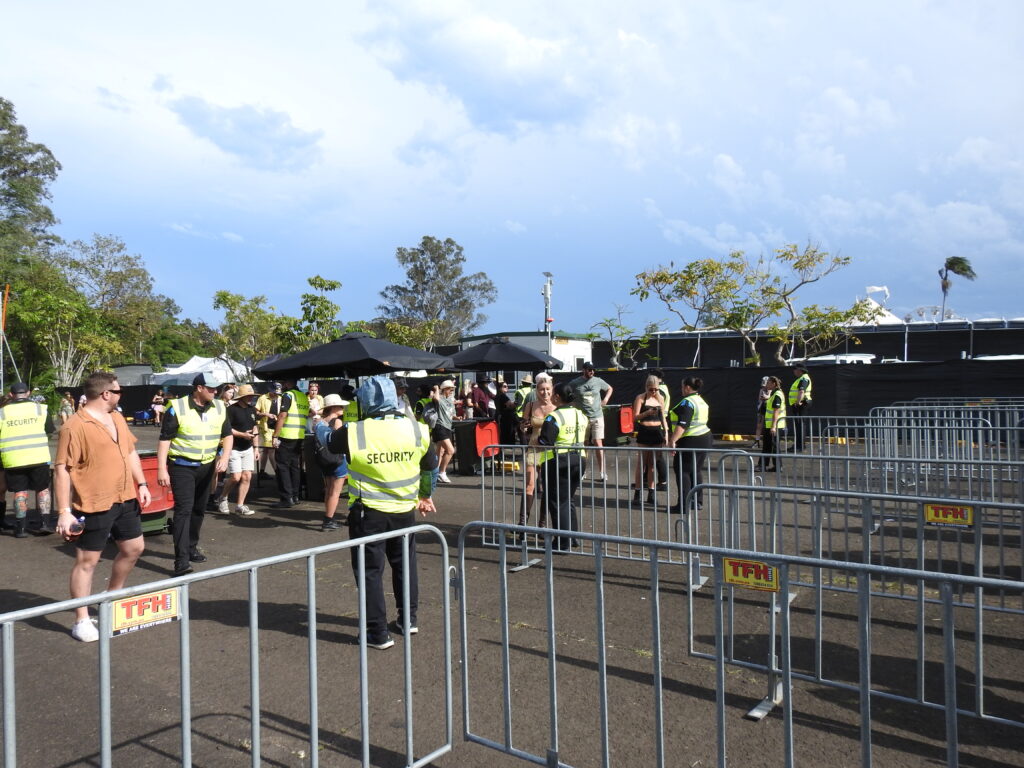
Queensland events are not a generic template
Queensland events sit under a mix of liquor licensing, workplace health and safety, and local permit conditions. Licensed outdoor events still have to hold RSA standards, manage intoxication, and keep to capacity. A Class 1 licence with a crowd controller function is the baseline for the people on the line. It is not the whole job.
A useful event brief answers:
- Expected peak and how that number was calculated
- Alcohol service model (bars, BYO, none) and last drinks
- Ingress and egress routes, including accessible paths
- Artist / activity triggers that will surge a barrier or a bar
- Weather fallback: wind, lightning, wet ground, delayed start
- Who has authority to stop a set, close a bar, or evacuate a zone
- How incidents are logged, and who the promoter talks to at 1am
ANSIC will not pretend a 2,000-patron community festival and a 20,000-patron multi-stage event need the same roster. They do not.
The failures we see before the gates even open
Most event problems are designed in, not caused by a single patron.
- One choke point at the only ticket lane, so the queue becomes the event
- Barrier lines that look tidy on a map and trap people against a stage
- Not enough controllers at last drinks and close, when everyone leaves at once
- Radio discipline that falls apart the first time two things happen together
- A welfare plan that exists on paper and is not staffed
- Treating crowd control as “door staff” and then asking them to run the whole site
If you are briefing us a week out with no site map, we can still help. We will also tell you what we cannot safely cover.
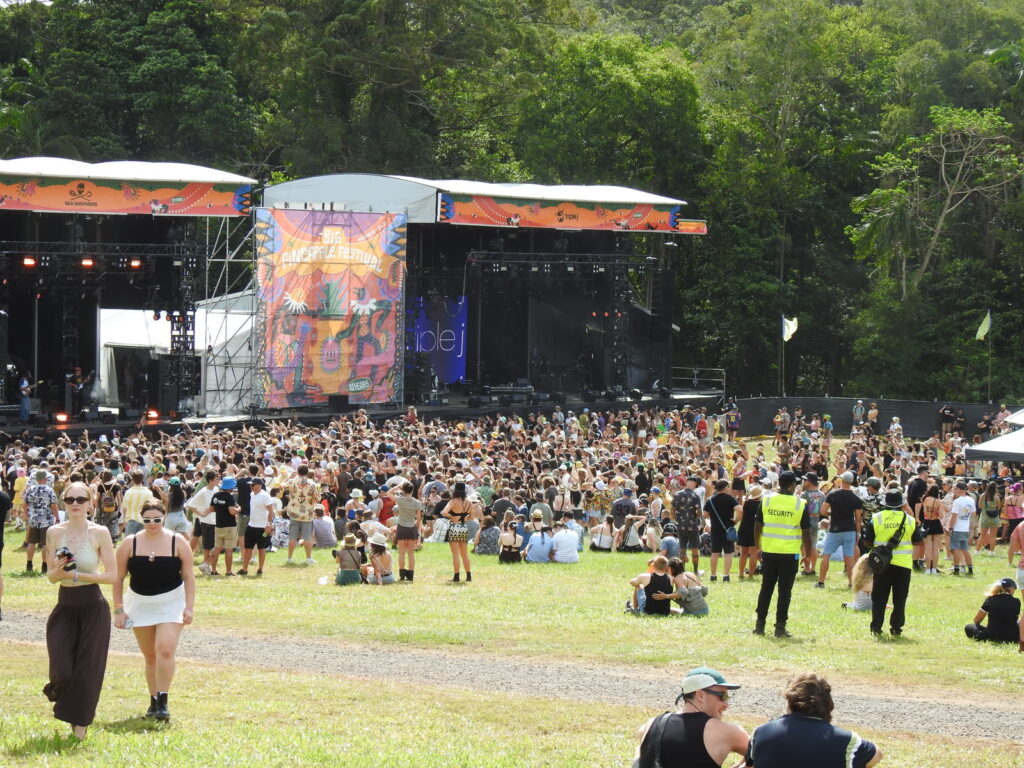
How ANSIC staffs a festival or event
We start with the site, the program, and the risk, then build the roster around movement, not just perimeter.
That usually means:
- Dedicated control room operations for live reporting and clear command and control
- A supervisor who owns the radio net and talks to the promoter and site manager in plain language
- Dedicated ingress and box-office teams so the show does not start with a crush
- Stage and pit controllers who understand surge, not just posture
- Roaming teams for bars and welfare, not only the front gate
- A close-down plan that is briefed before doors, not invented at 11pm
- Incident logs that a venue, insurer, or regulator can actually read
Our people hold the licences the job requires. The difference on the night is how they are briefed, who they report to, and whether they have done this kind of site before.
What we need from you before we quote a roster
Send a site map, expected numbers, program times, alcohol plan, and any council or liquor conditions you already have. If you have photos from last year’s event, those are more useful than a mood board.
We will come back with a deployment, not a generic package.
If you are planning a festival, concert, or large private event in Brisbane or regional Queensland and you want crowd control that holds up after the headline act, talk to ANSIC before you lock the site.